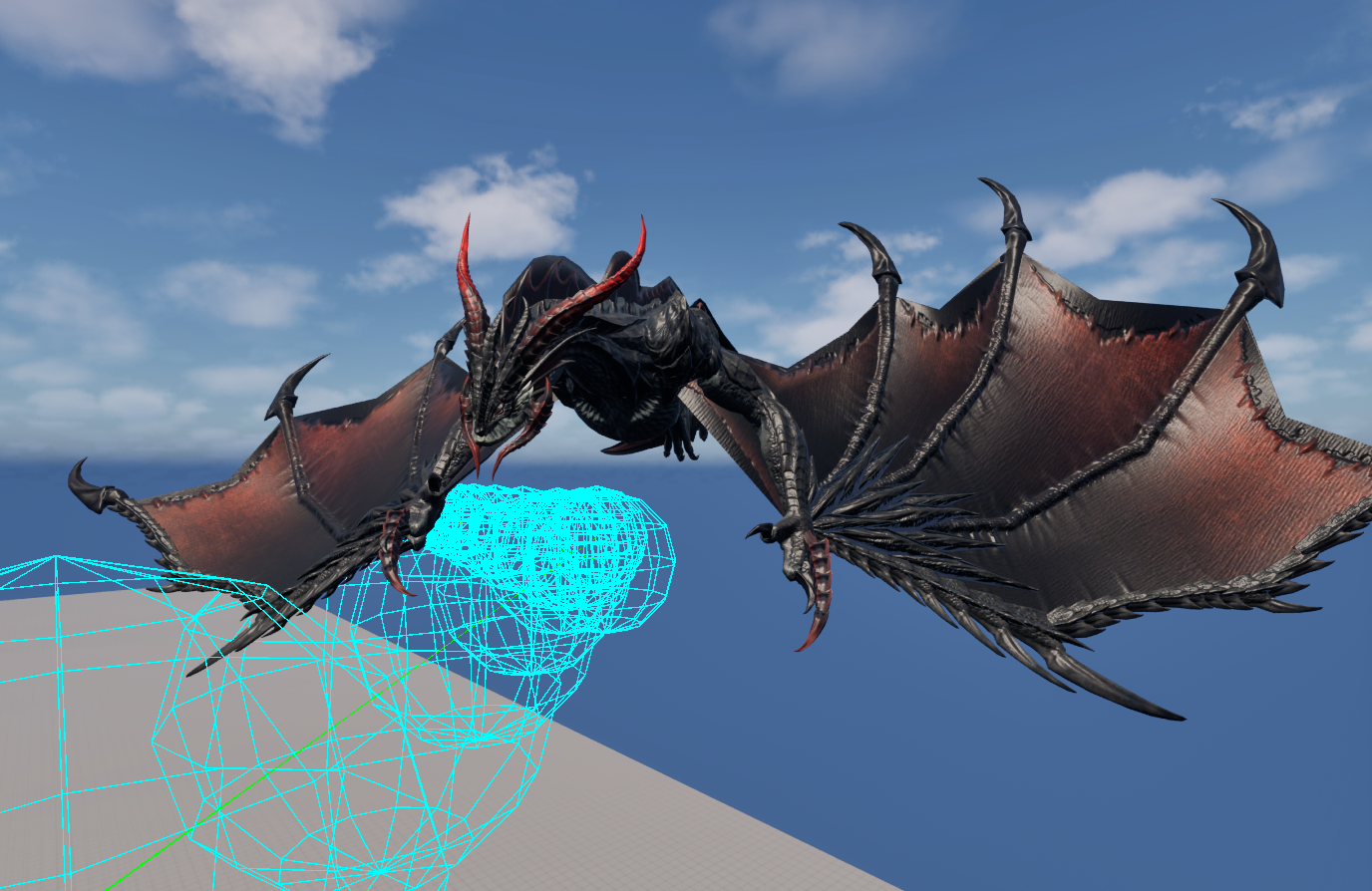
Ground & aerial patrol
The dragon patrols on the ground, transitions into flight at path boundaries and continues along aerial movement logic.
The goal was to build a boss that changes behavior rather than simply cycling attacks.
The dragon patrols on the ground, transitions into flight at path boundaries and continues along aerial movement logic.
Attacks are selected from data assets using range, priority and cooldown conditions instead of hard-coded branches.
AI Perception drives target detection and re-engagement while keeping state changes centralized.
When sight is lost, the boss searches a configurable area before either re-acquiring the player or returning to patrol.
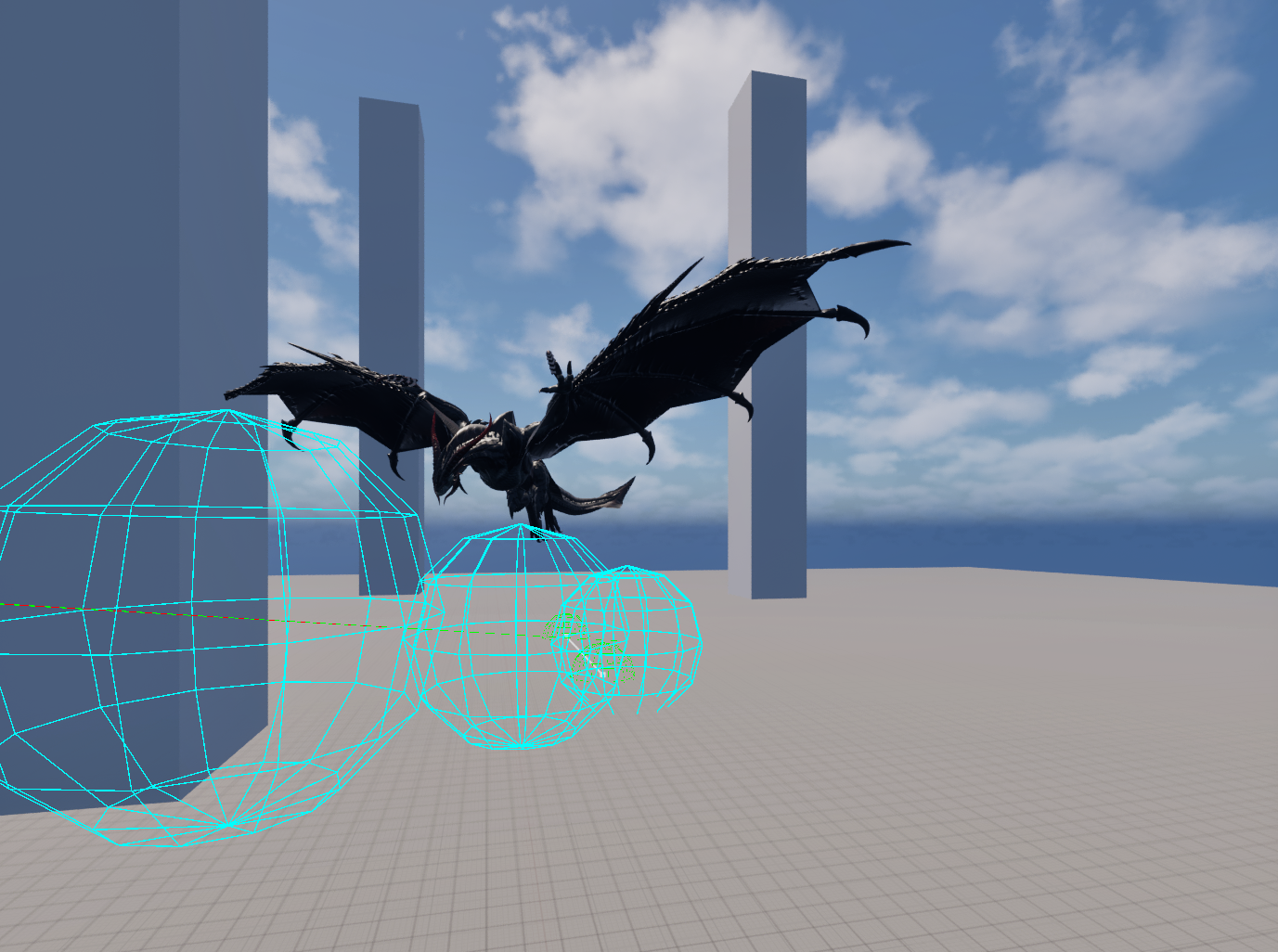
I extended Unreal’s Behavior Tree with custom C++ tasks, services and decorators so the boss logic could stay modular and readable.
Custom tasks choose attacks, move through aerial patrol points and execute investigation behavior.
Services update flying state, monitor target loss and maintain attack cooldown information.
Decorators validate attack conditions, visibility and patrol milestones before branches are entered.
Attack tuning lives in data instead of code, making damage, cooldowns and animation references easier to iterate.